Best Cookware Sets: What to Look For
A 15-piece cookware set sounds generous and usually is not. Half the box is lids and pieces you will never reach for. What matters is the handful of pans you use every day and what they are made of.
Written by the DealNook team · Updated October 2026
Count the pans, not the pieces
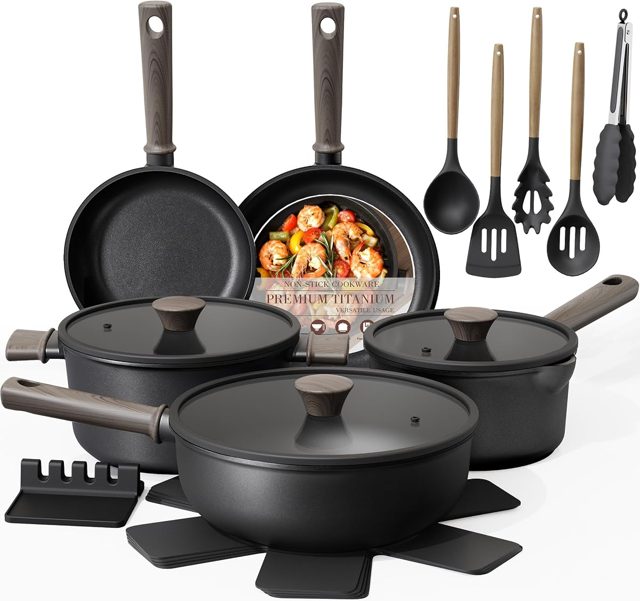
Marketing counts every lid and utensil to inflate the piece number. A 15-piece set might be five actual pans plus lids, a couple of nylon tools, and a steamer insert. Look past the headline count to the pans themselves: a good everyday kit is a 10- or 12-inch skillet, a saucepan or two, and a stockpot or sauté pan. Four or five quality pieces you use constantly beat a box of fifteen where a third gathers dust.
Nonstick, stainless, or cast iron
Each material does a different job, which is why many cooks mix rather than buy one set. Nonstick is for eggs and delicate foods and for easy cleanup, but the coating wears out in a few years and cannot take high heat or metal utensils. Stainless steel browns and builds fond for sauces, lasts decades, and handles any heat, but needs technique so food does not stick. Cast iron holds and radiates heat beautifully for searing and baking, lasts a lifetime, and is heavy. A practical kitchen has a nonstick skillet, a couple of stainless pieces, and maybe one cast-iron pan.
Construction is what lasts
The build decides whether a pan warps, heats evenly, and survives years. Look for a fully clad or thick encapsulated base so heat spreads instead of scorching in a ring. Riveted handles hold far longer than screwed or glued ones. An oven-safe rating and compatibility with your cooktop (induction needs magnetic bases) matter too. A thin, light pan that heats unevenly is the hallmark of a cheap set, and no coating fixes that.
Nonstick coatings and their lifespan
All nonstick coatings wear out; the question is how fast and how you treat them. Use low to medium heat, no metal utensils, and hand washing to extend life to several years. Harder reinforced coatings last longer but still are not forever. Because nonstick is a consumable, do not overspend on a huge nonstick set — buy a good skillet or two you will replace in time, and put the money into stainless or cast iron that lasts.
Handles, lids, and the small stuff
Comfortable, stay-cool handles and tight glass lids make daily cooking better in ways the spec sheet ignores. Heavy pans need handles that balance well or they are a chore to lift full. Oven-safe handles widen what a pan can do. These details, plus whether the set is dishwasher-safe (many nonstick pans should not be), decide how much you actually enjoy using the cookware, which is what keeps it in rotation.
| Material | best for | trade-off |
|---|---|---|
| Nonstick | Eggs, delicate, easy cleanup | Coating wears out in years |
| Stainless steel | Browning, sauces, longevity | Needs technique, food can stick |
| Cast iron | Searing, baking, heat retention | Heavy, needs seasoning |
| Carbon steel | Fast, pro-style, lighter cast iron | Needs seasoning |
What a fair price looks like
Starter set
A few nonstick and stainless basics. Fine to begin a kitchen.
Quality everyday
Clad stainless core pieces plus a good nonstick skillet. The lasting choice.
Premium / fully clad
Restaurant-grade build, lifetime pieces. For serious, frequent cooks.
Common questions
Are big cookware sets worth it?
Usually not. The piece count is padded with lids and tools, and you use only a few pans regularly. A handful of quality pieces in the right materials beats a large box where a third sits unused.
What cookware material is best?
There is no single best — each does a job. Nonstick for eggs and easy cleanup, stainless for browning and longevity, cast iron for searing and heat retention. Most good kitchens mix all three rather than buy one material.
How long does nonstick cookware last?
A few years with gentle treatment — low to medium heat, no metal utensils, hand washing. All coatings wear out eventually, so treat nonstick as a consumable and do not overspend on a large nonstick set.
What makes cookware good quality?
Even heating from a thick clad or encapsulated base, riveted handles that do not loosen, oven-safe ratings, and compatibility with your cooktop. A thin pan that heats unevenly is the sign of a cheap set no coating can fix.