Best Electric Toothbrushes: What to Know
Dentists agree electric beats manual. They do not agree you need the $250 model. The gap between a great toothbrush and an overpriced one is mostly software you will never miss.
Written by the DealNook team · Updated October 2026
Sonic versus oscillating
The two main technologies clean differently. Oscillating-rotating brushes use a small round head that spins back and forth, cupping each tooth. Sonic brushes use an elongated head vibrating at high frequency to create fluid motion that cleans slightly beyond where the bristles touch. Studies show both clean well; the better choice is the one that feels comfortable and that you will use for the full two minutes. Neither technology is clearly superior for everyday use.
The only features that matter
Two features genuinely improve your brushing: a two-minute timer (ideally with 30-second quadrant pulses) and a pressure sensor that warns when you brush too hard, which is the main cause of gum recession. Everything beyond that — multiple cleaning modes, app coaching, travel cases, position detection — is convenience, not better cleaning. A brush with just a timer and pressure sensor delivers 90 percent of the benefit of the flagship.
Brush heads are the real long-term cost
Like razors and printers, the handle is cheap and the refills add up. Replacement heads cost $5 to $12 each and need replacing every three months — roughly $20 to $48 a year. Proprietary heads from premium brands cost more, and compatible third-party heads vary in quality. Before committing to a brand, check its head prices and whether reliable cheaper heads exist. This cost outweighs the handle price difference within a year or two.
Battery and charging
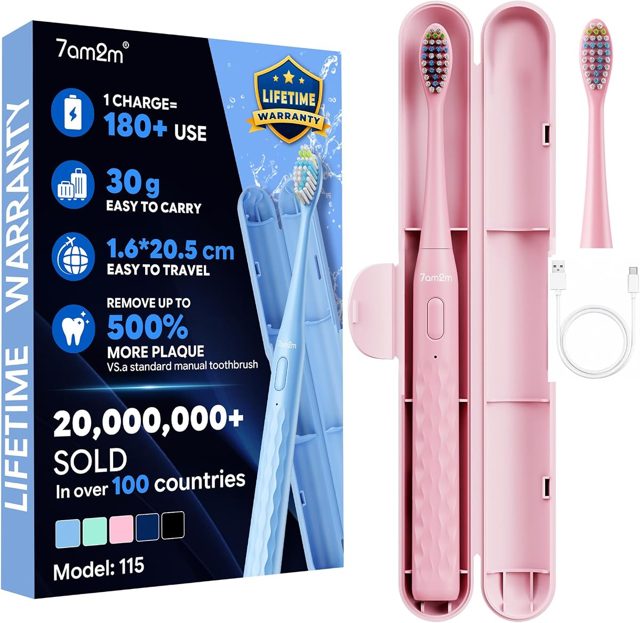
Battery life ranges from one to four weeks per charge. Longer battery matters most for travel — a brush that lasts two-plus weeks means leaving the charger home. Lithium-ion models hold charge better over years than older nickel types. A USB charging option is handy for travel. This is a minor spec for home use but a real convenience for frequent travelers.
Why the mid-range usually wins
The cleaning mechanism in a brand's $50 brush is often identical to its $200 flagship; the price difference buys app connectivity, extra modes, a fancier case, and a display. Since the core cleaning is the same, the mid-range model is the value sweet spot for almost everyone. Spend the saved money on refill heads. Only step up to premium if you specifically want app coaching or have been told to by a dentist.
| Feature | worth it | skip |
|---|---|---|
| Timer (2-min) | Essential | — |
| Pressure sensor | Essential (protects gums) | — |
| Multiple modes | Nice, rarely used | Paying a premium for them |
| App / Bluetooth | Only if you'll use it | Main reason to buy premium |
| Travel case | Handy if you travel | Deluxe charging cases |
What a fair price looks like
Core model
Timer, pressure sensor, good cleaning. All most people need.
Comfortable step-up
Better battery, a mode or two, nicer feel. The popular pick.
Premium
App coaching, display, case. Pay only if you want the extras.
Common questions
Is an expensive electric toothbrush worth it?
Usually not. A brand's mid-range brush often uses the same cleaning mechanism as its flagship — the extra cost buys apps, modes, and a case, not better cleaning. The $40 to $70 range is the value sweet spot for most people.
Sonic or oscillating — which cleans better?
Both clean well, and studies do not show a clear winner for everyday use. Pick whichever feels comfortable, since the brush you will use properly for two minutes matters more than the technology.
How often should I replace the brush head?
Every three months, or sooner if the bristles splay out. Worn bristles clean poorly, so budget for roughly $20 to $48 a year in replacement heads depending on the brand.
Do I really need the pressure sensor?
Yes — it is one of the two features worth having. Brushing too hard is a leading cause of gum recession, and the sensor warns you before you do damage.