Best Adjustable Dumbbells for Home
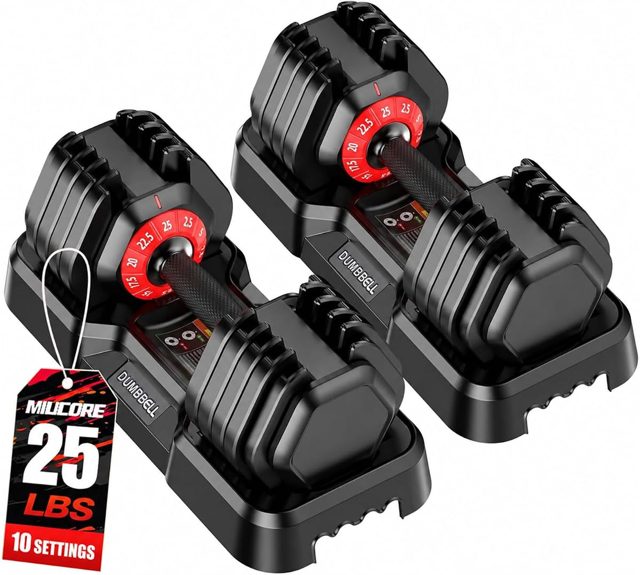
Adjustable dumbbells replace a whole rack and save a room's worth of space. But the adjustment mechanism that makes that possible is also the part that breaks, so it is what to judge them on.
Written by the DealNook team · Updated October 2026
Weight range sets your ceiling
Most adjustable dumbbells go from 5 up to 50 pounds per hand, which covers the vast majority of home lifters for years. Heavier 90-pound versions exist for serious strength work but cost much more and are bulkier. Buy for where you will be in a year, not just today — the range should leave room to progress. For beginners and general fitness, the 5-to-50 range is almost always enough; outgrowing it is rare.
Adjustment mechanism: dial, pin, or plate
This is the heart of the purchase. Dial systems adjust fastest — twist to the weight and lift — but have more internal parts that can jam if dropped. Selector-pin systems are similar. Plate-loading adjustable dumbbells are slower to change but simpler and nearly indestructible. If you superset and change weight constantly, speed matters; if you want something that survives being dropped, mechanical simplicity wins. Dropping dial-type dumbbells is the number-one cause of failure, so if you lift heavy and may drop them, lean simpler.
Dimensions and handle feel
Adjustable dumbbells are longer and bulkier than fixed ones at the same weight because the whole weight stack travels with you even at low settings. That length can be awkward for exercises like chest flyes or when your range of motion is tight. Check the length at minimum weight. Handle knurling and grip diameter affect comfort and control, especially as you sweat — a smooth, too-thick handle slips.
Durability and the drop test
Home dumbbells get dropped, and that is exactly what cheap adjustable sets cannot survive. The selector mechanism and plastic housings are the failure points. Read reviews specifically for how a model holds up to being set down hard or dropped, not just how it performs new. A set that jams after a drop is a set you stop using. Metal internals and a reputable brand's warranty are worth the premium here.
Do you need the stand
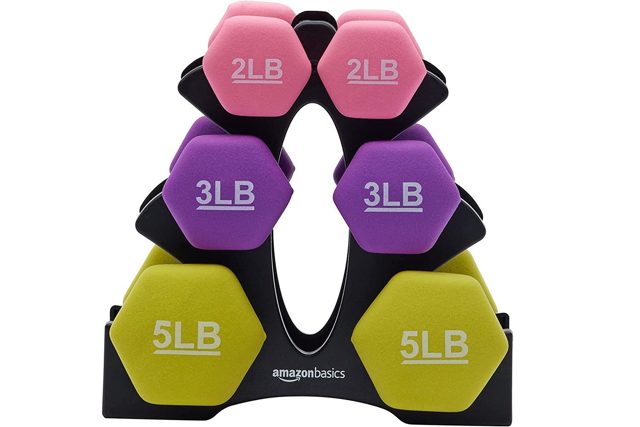
Many sets sell the dumbbells alone or with a stand. A stand saves your back (you are not bending to the floor each set) and keeps the dumbbells off the ground, which reduces drop damage. For a dedicated workout space it is worth it; for occasional use you can skip it. Factor it into the budget, because the all-in price with a stand is the real cost of the setup you will actually use.
| Mechanism | speed | durability |
|---|---|---|
| Dial / selector | Fastest to change | More parts, drop-sensitive |
| Pin-based | Fast | Fairly robust |
| Plate-loading | Slow to change | Nearly indestructible |
| Fixed (for comparison) | Instant | Indestructible, space-hungry |
What a fair price looks like
Entry adjustable
5–25 lb range or basic build. Fine for light, general fitness.
The standard
5–50 lb dial or pin set, solid build. Most home lifters' choice.
Heavy / premium
Up to 90 lb, best durability, often with stand. For serious training.
Common questions
What weight range should I get?
A 5-to-50-pound-per-hand set covers most home lifters for years. Buy for where you will progress to, not just your starting weight. Only dedicated strength trainers tend to need the heavier 90-pound sets.
Are dial adjustable dumbbells reliable?
The good ones are, but the dial mechanism has more parts and is sensitive to being dropped. If you lift heavy and might drop them, a simpler pin or plate-loading design survives rough use better.
Are adjustable dumbbells worth it over a fixed set?
Yes for home use — one pair replaces a whole rack and saves enormous space. The trade-offs are a bulkier feel at low weights and a mechanism that needs more care than solid fixed dumbbells.
Do I need the stand?
Not essential, but it saves your back between sets and reduces drop damage by keeping the weights off the floor. For a regular workout space it is worth including in the budget.